Real-Time PAX Counts at Each Checkpoint
Live passenger counts at check-in, security, gates, and boarding — updated every few seconds from sensors and cameras already on site.

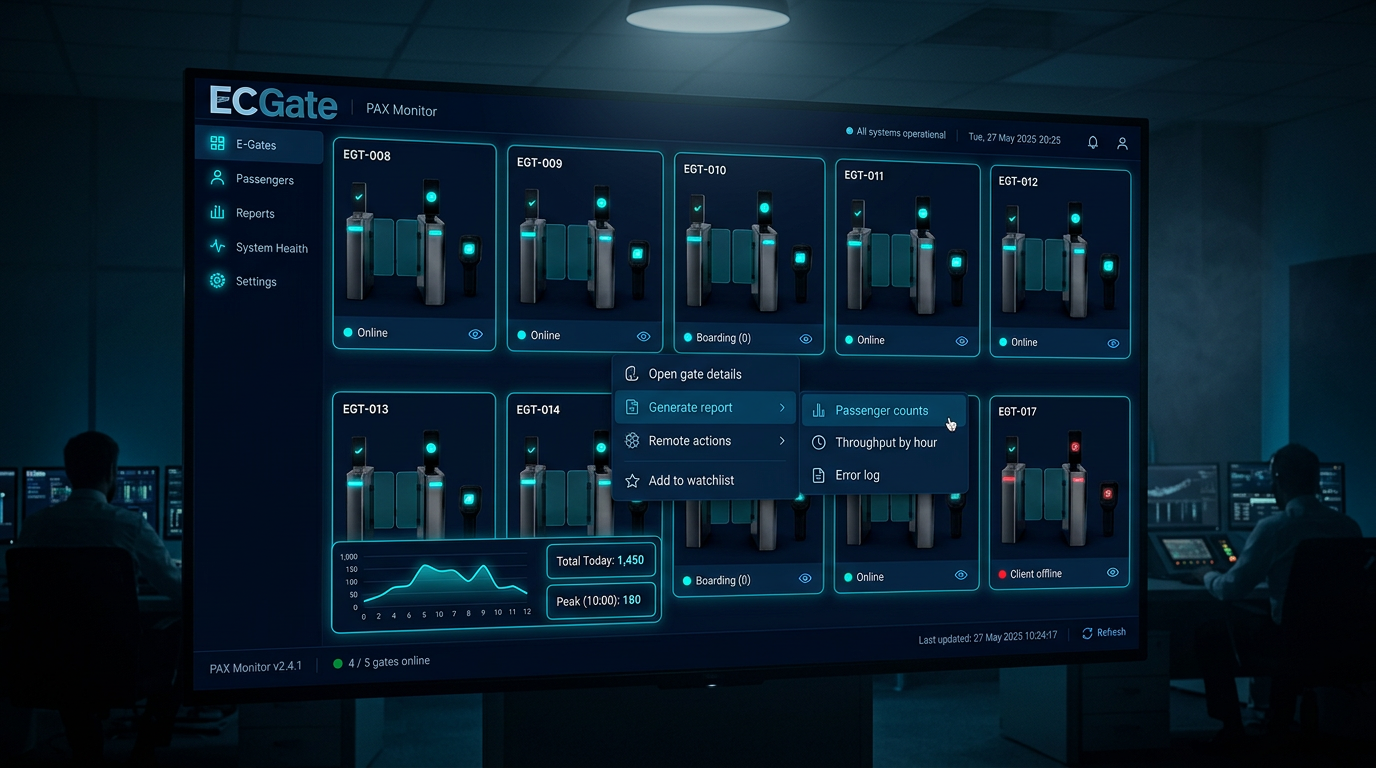
Home / PAX Monitor — Real-Time PAX Counts at Every Checkpoint
PAX Monitor gives your operations team live visibility into passenger flow — real-time PAX counts at every checkpoint, so you can prevent congestion, reduce wait times, and keep every terminal running smoothly.
PAX Monitor
PAX Monitor tracks passenger counts at every checkpoint across your terminal — check-in, security, gates, and boarding — feeding live numbers into a single operations dashboard.
See exactly how many passengers are at each checkpoint as it happens, spot congestion before it builds, and reallocate staff in time to keep things moving.
Capabilities
Gates deployed across partner airports
Passengers processed through our biometric platforms
To process each passenger through a biometric gate
Live passenger counts at check-in, security, gates, and boarding — updated every few seconds from sensors and cameras already on site.
Flight schedules, historical traffic, and live checkpoint counts combine to forecast surges and gate congestion up to 30 minutes before they occur.
Instant alerts when checkpoint counts cross a threshold, with optional automated responses — opening additional lanes or dispatching staff before crowding escalates.
Key Benefits
Real-time checkpoint counts show congestion building minutes before it becomes a problem — enough time to open a lane or send extra staff, instead of reacting after a queue has already formed.
PAX Monitor integrates with your existing gate access and entry systems via secure APIs — no costly hardware replacement needed.
Shorter wait times, better staffing distribution, and faster throughput translate directly into higher passenger satisfaction scores and fewer complaints.
Historical reports and trend analysis help you optimize staffing schedules and plan terminal layouts around real passenger flow patterns.
See it in action
E-gates, passenger flow and real-time PAX counts — explore the platform yourself.